

TBVI Awardees Announcement 2027
At TBVI, we are committed to supporting the next generation of scientists and providing a platform for promising researchers to share their work and achievements. Through the TBVI Award, we recognise outstanding contributions to tuberculosis (TB) vaccine research and development, while offering early-career scientists the opportunity to present their work to an international audience.
The two winners of the TBVI Award 2027 will have the opportunity to showcase their research at the next TBVI Symposium, taking place on 26–27 January 2027 in Les Diablerets, Switzerland. The annual symposium brings together researchers, developers, policymakers and funders from around the world to exchange knowledge, strengthen collaborations and explore new initiatives to advance TB vaccine development.
We are delighted to announce the two winners of the 2027 TBVI Award:
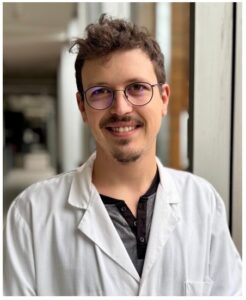 Dr Thomas Benoist is a postdoctoral researcher at the Institute of Pharmacology and Structural Biology (IPBS, CNRS/University of Toulouse), France. His work combines tissue engineering and immunology to study how human tissues respond to infection.
He obtained a Master of Pharmacy at University College London, where he also completed his PhD in Tissue Engineering and Regenerative Medicine in 2024. During his PhD, he developed automated bioreactors for whole-lung tissue engineering and used these systems to model respiratory syncytial virus infection, subsequently integrating immune cells such as neutrophils(doi: 10.1016/j.biomaterials.2023.122203).
In his current postdoctoral work, he has applied this experience to TB vaccination and infection. In close collaboration with TissUse, a Berlin, Germany-based, biotechnology company, he designed and performed a study using an autologous human multi-organ-on-chip system combining lung, liver and lymphoid compartments, developed by TissUse. The project, funded by the Gates Foundation, investigated vaccination-associated immune responses across these tissues and their relationship to infection control (unpublished data). He also contributed to human lung models for evaluating TB treatments by differentiating and characterizing monocyte-derived alveolar macrophage-like cells (doi:10.1128/spectrum.03729-25).
He is particularly interested in improving the maturation and function of engineered human tissues, as well as integrating immune components, to develop models that better reproduce human disease. He is currently open to new postdoctoral opportunities in that field.
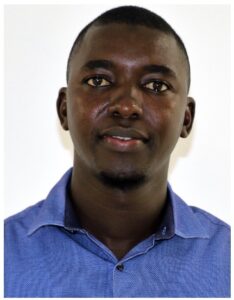 Dr Ismaila L. Manneh is a postdoctoral research fellow at the Medical Research Council Unit The Gambia at London School of Hygiene and Tropical Medicine (MRCG at LSHTM), where he works in the TB Research Laboratory.
He holds a PhD in Immunology from LSHTM awarded in 2025. His research focuses on understanding host immune responses to Mycobacterium tuberculosis, with particular interest in identifying biomarkers for TB diagnosis, treatment response and disease progression. His work combines immunological approaches, including cytokine profiling, host gene expression analysis and single-cell RNA sequencing, to investigate immune mechanisms associated with TB infection and disease.
Through his research, Ismaila aims to contribute to the development of improved diagnostic tools and a better understanding of the immune responses that influence TB susceptibility and outcomes, particularly in populations disproportionately affected by the disease.
He is passionate about advancing TB research through collaborative science and building research capacity in The Gambia and across Africa.